Learning Outcomes
i. Define seedless vascular plants and identify their distinguishing features.
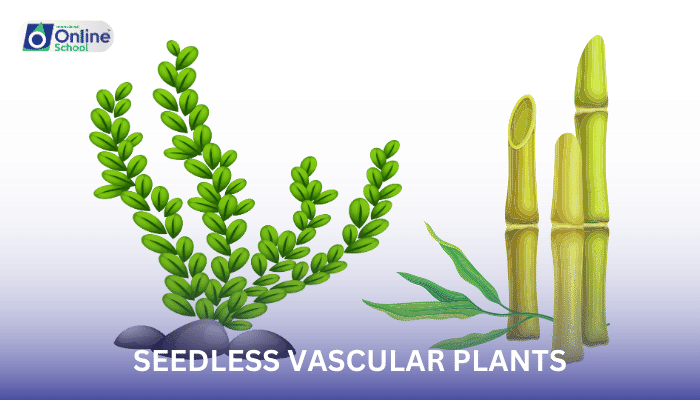
ii. Recognize the characteristics and diversity of whisk ferns, club mosses, horsetails, and ferns as representatives of seedless vascular plants.
iii. Understand the evolutionary significance of seedless vascular plants in the transition from water to land.
iv. Appreciate the ecological importance of seedless vascular plants in various ecosystems.
Introduction:
In the fascinating realm of plants, seedless vascular plants represent an ancient lineage, occupying a unique position in the evolutionary history of plant life. Unlike their more modern counterparts, seed-bearing vascular plants, these organisms lack seeds, the reproductive units that have enabled plants to conquer a wider range of environments.
i. Whisk Ferns: Delicate Relics of the Past
Whisk ferns, with their delicate, branched stems and tiny, spore-bearing structures called strobili, are among the most ancient lineages of seedless vascular plants. Their slender, whisk-like fronds, devoid of true leaves, give them an otherworldly appearance, reminiscent of plants from long-vanished eras.
ii. Club Mosses: Survivors of the Carboniferous Era
Club mosses, once dominant plants during the Carboniferous Era, are now relatively rare, inhabiting moist, shaded environments. Their distinctive, club-shaped structures, containing spores, and their intricate branching patterns showcase their evolutionary heritage.
iii. Horsetails: Living Fossils from the Coal Forests
Horsetails, with their jointed, hollow stems and whorled branches, resemble giant scouring pads, earning them their common name. They are remnants of the lush coal forests that dominated the Earth millions of years ago, adding a touch of ancient history to modern landscapes.
iv. Ferns: The Graceful Spore-Bearers
Ferns, with their graceful fronds and intricate spore-bearing structures, are among the most recognizable seedless vascular plants. Their fronds, often adorned with delicate leaflets, exhibit a wide range of shapes and sizes, adding beauty and diversity to various habitats.
v. Evolutionary Significance: Bridging the Aquatic-Terrestrial Gap
Seedless vascular plants played a crucial role in the transition of plants from aquatic to terrestrial environments. Their ability to transport water and nutrients through specialized tissues, xylem and phloem, enabled them to grow taller and thrive in a wider range of habitats.
vi. Ecological Importance: Unsung Heroes of Ecosystems
Despite their lack of seeds, seedless vascular plants play a significant role in maintaining the balance of ecosystems. They contribute to soil formation, prevent erosion, and provide habitat for a diverse range of organisms.
Seedless vascular plants, with their ancient lineage, diverse forms, and ecological significance, represent a remarkable chapter in the evolutionary history of plants. Their presence in modern ecosystems reminds us of the interconnectedness of life and the importance of conserving these unique and valuable organisms for future generations.
